Sunday in Texcoco: The Ritual, Flavor and Tradition of Mexican Barbacoa
Some Mexican food experiences begin long before the first bite. Barbacoa is one of them.
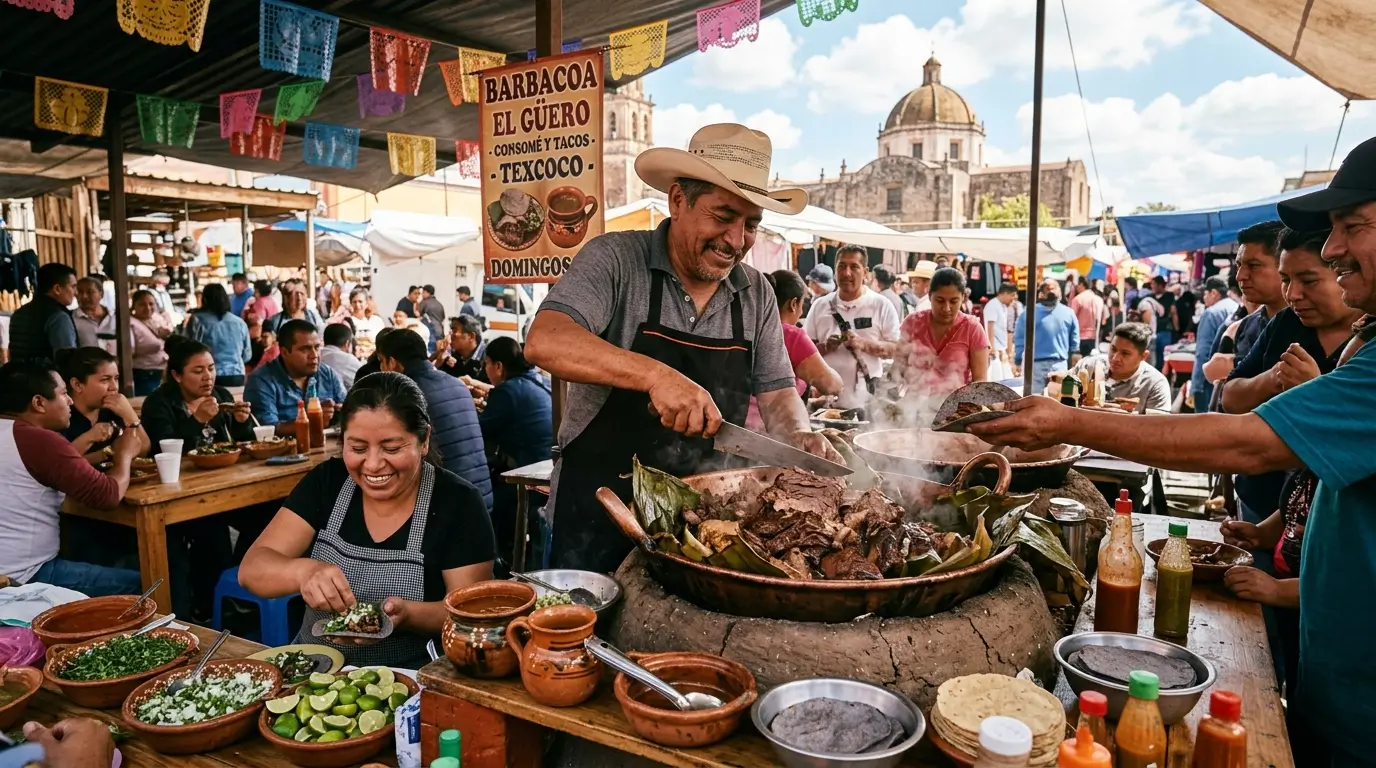
In Texcoco, a Sunday morning barbacoa meal can involve an overnight cooking process, underground pits, agave leaves, steaming lamb, fresh tortillas, homemade salsa and tables filled with families. The food is important, but the ritual surrounding it is what makes the experience unforgettable.
A visit to El Pica 1 offered a close look at this traditional style of barbacoa and showed how a simple meal can become an entire Sunday occasion.
The Meal Starts the Night Before
Barbacoa is not a dish that is prepared in a hurry.
The traditional method described in the source involves cooking meat slowly in an underground fire pit, often for many hours or overnight. The long cooking period allows the meat to gradually steam and braise until it becomes exceptionally tender.
That overnight preparation is one reason the dish naturally fits a Sunday morning schedule.
Inside the Traditional Cooking Pit
The cooking method is remarkably different from an ordinary oven or grill.
A tray is positioned inside the pit and filled with liquid and aromatics such as water, garlic, chickpeas and fresh herbs. A grill is placed above it, followed by the meat.
The meat is then covered with layers of maguey, or agave, leaves before the pit is sealed. The enclosed environment allows the meat to cook slowly in the heat and moisture.
Lamb Takes Center Stage
In the Texcoco experience described by the source, lamb was the main attraction.
Traditional Mexican barbacoa can involve lamb, mutton or goat, but this particular meal centered on whole lamb cooked until it was soft enough to pull apart.
Once uncovered, the meat was removed from the pit piece by piece and placed onto trays for serving.
The Pit Opening Is Part of the Experience
Arriving early matters because the most dramatic part of the morning happens when the pits are opened.
At El Pica 1, the dirt was carefully swept away to reveal the covering beneath it. Once the agave leaves were removed, the steaming lamb appeared underneath.
Guests gathered around as the meat was brought out, turning the cooking process itself into part of the morning’s entertainment.
A Bowl of Consommé Comes With the Meat
Nothing from the cooking process goes to waste.
After the lamb was removed, the flavorful liquid collected below it was ladled out and served as consommé. The broth became its own part of the meal, enjoyed alongside the freshly uncovered meat.
This created a natural pairing: tender lamb on the plate and warm consommé in the bowl.
The Tacos Are Built at the Table
The finished lamb does not arrive as an elaborate plated dish.
Instead, guests take the meat back to their tables and combine it with warm tortillas, salsa, onions and cilantro.
That simple setup gives everyone the freedom to make tacos according to their own taste while keeping the slow-cooked meat at the center of the meal.
El Pica 1 Feels More Like a Gathering
The setting contributes heavily to the experience.
El Pica 1 is described as an expansive outdoor space with tables and chairs arranged beneath tree canopies. Families gather there, share food and spend much of the day together.
The environment feels distinctly different from a quick restaurant breakfast because people come prepared to stay.
Sunday Becomes the Main Event
The meal is closely tied to the rhythm of the weekend.
According to the source, some families prepare barbacoa on Saturday night so it can cook through the night and be eaten on Sunday morning after mass.
That timing gives the dish a ceremonial quality. By the time the food is served, the cooking has already been underway for hours.
Beyond Lamb: What Else Is Happening Around the Tables?
The barbacoa may be the star, but it is not the only food being prepared.
The experience included large pots filled with bubbling oil for frying chicharrónes, plantains and corn cakes. Fresh tortillas and salsas were also being prepared nearby.
The meal therefore felt like a full culinary gathering rather than a single-dish outing.
Pulque Adds Another Layer to the Morning
The drinks were part of the experience too.
Clay vessels held pulque, a fermented beverage made from agave sap. The versions described in the source included combinations flavored with coconut water, pineapple and cactus.
Sampling different versions added another regional element to an already food-focused morning.
Why Visitors Need to Arrive Early
Late arrival can mean missing the most memorable part.
The source describes arriving in Texcoco around 8 a.m. to watch the pits being uncovered. By 9 a.m., most of the outdoor tables were already filled.
For travelers interested in seeing the preparation rather than simply ordering a plate of food, an early start is therefore an important part of the experience.
The Atmosphere Is Just as Important as the Food
What stands out about this style of barbacoa is the social side.
Families arrive with food and drinks, gather beneath the trees and stay together for an extended meal. The table becomes a place for conversation and celebration rather than simply somewhere to eat.
That atmosphere is difficult to separate from the food itself.
Why the Flavor Is Hard to Reproduce
Home cooks can make tasty versions of barbacoa, but reproducing this particular experience is another matter.
The source describes an attempt to cook a leg of lamb in banana leaves using a ceramic charcoal grill. The result was good, but it still lacked something.
The missing elements included the traditional agave leaves, underground cooking environment and the festive atmosphere surrounding the meal.
The Difference Is in the Entire Setting
A home recipe can imitate the basic idea of slow cooking meat.
What is much harder to recreate is everything happening around it: the opening of multiple pits, the aroma of freshly uncovered lamb, the consommé being ladled out, the tortilla and salsa tables and families gathering for Sunday.
That combination gives traditional barbacoa its distinctive character.
A Return Trip Says a Lot
The experience was memorable enough to inspire a second visit two years later.
The return trip included the original companions as well as a photographer experiencing the tradition for the first time. Watching the event through another person’s perspective reinforced how visually and culturally striking the process can be.
The Food Disappears Quickly
Once the pits are opened, there is very little waiting.

People gather with plates to receive portions of the freshly cooked lamb, while consommé is served separately. The meat moves rapidly from the pit to the tables.
The speed of service creates a noticeable contrast with the extremely slow cooking process that came before it.
Barbacoa Is Built for Sharing
The way the meal is served naturally encourages people to eat together.
Bowls of salsa, onions, tortillas and other accompaniments are passed around the table. Chicharrónes and other foods add variety, while everyone can assemble their own tacos.
It is a format that feels informal, communal and deeply connected to the idea of a family Sunday meal.
What Makes Texcoco Special for Barbacoa?
The source presents Texcoco as a place where visitors can experience this traditional preparation outside the more conventional tourist-dining environment.
The trip from Mexico City takes time, but the reward is a glimpse into a food tradition that unfolds in a much more communal setting.
The emphasis is not on a polished dining room. It is on the cooking process, the food and the people gathered around it.
A Sunday Barbacoa Morning Is More Than Breakfast
The meal begins with anticipation, continues with the opening of the pits and ends with a long stretch of shared food and conversation.
That is why the experience feels larger than a normal breakfast. The cooking, serving and social atmosphere all happen as parts of the same tradition.
How to Enjoy the Experience
For a visitor, the best approach is to arrive early enough to see the pits opened and then stay long enough to enjoy the meal properly.
Try the lamb with warm tortillas first, then add salsa, onion and cilantro. Have some consommé alongside it and explore the other foods being served around the tables.
Taking time to watch the preparation is part of the experience too.
Frequently Asked Questions
What is consommé?
In this barbacoa setting, consommé is the flavorful liquid collected from the cooking process and served as a broth alongside the meat.
What toppings are served with barbacoa?
The source describes warm tortillas, salsa, onions and cilantro, with chicharrónes also appearing as part of the meal.
Why is barbacoa associated with Sunday?
The source explains that some families begin cooking on Saturday night so the meat will be ready Sunday morning, making the meal part of a weekly family tradition.
Why should you arrive early in Texcoco?
Arriving early allows visitors to watch the cooking pits being uncovered and the freshly cooked lamb and consommé being removed.
Can traditional pit-style barbacoa be made at home?
A home cook can prepare slow-cooked lamb, but the source notes that reproducing the exact flavor and atmosphere of the Texcoco experience is difficult without the traditional pit, agave leaves and communal setting.
Final Thoughts
The Texcoco barbacoa experience shows why some foods cannot be understood through the recipe alone. The lamb is slow-cooked for hours, uncovered from underground pits and served with consommé, tortillas, salsa, onions and cilantro.
But the real character of the meal comes from everything surrounding it: an early Sunday morning, families gathering beneath the trees, food being prepared in large quantities and everyone sharing the same table.
That combination of cooking tradition and community is what makes a Sunday barbacoa in Texcoco such a memorable Mexican food experience.