Fish Taco Ingredients: The Complete Guide to Fresh, Flavorful Taco Components
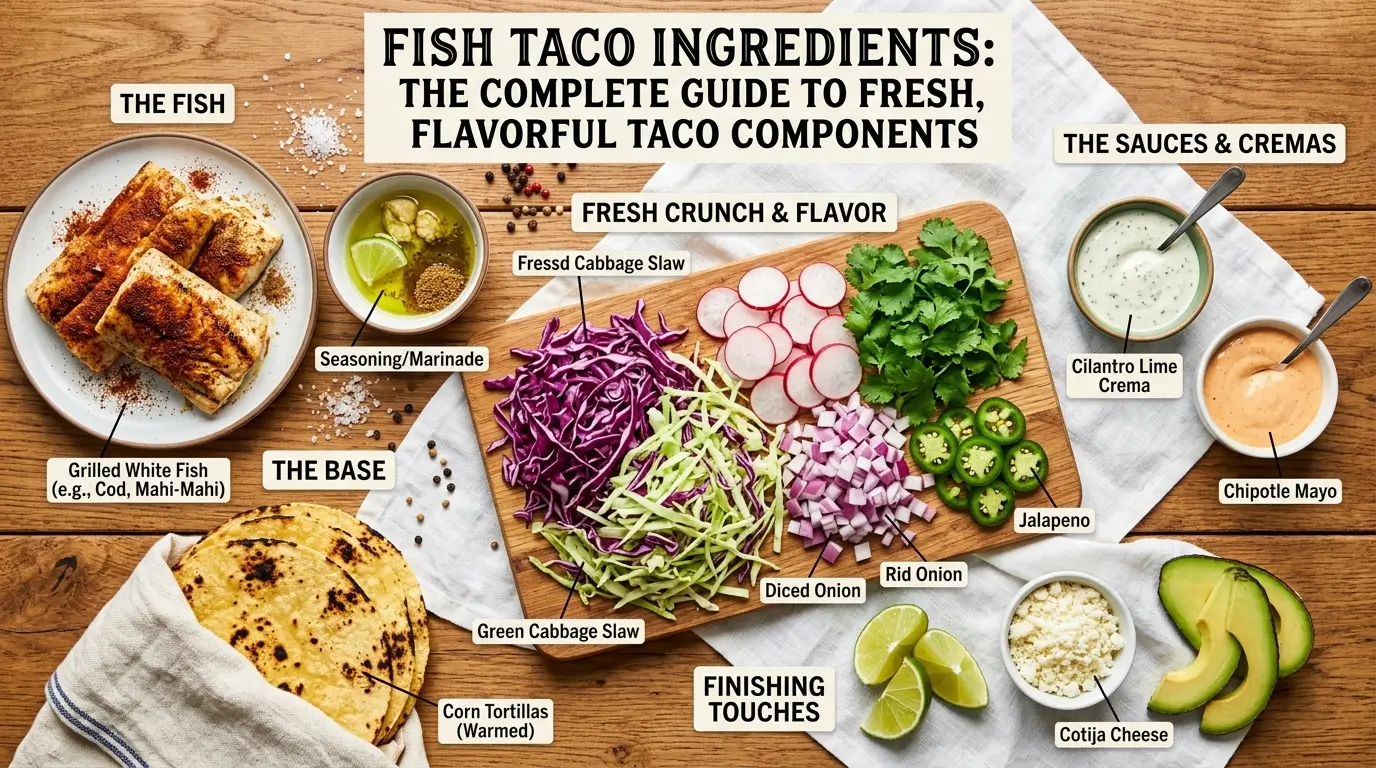
A memorable fish taco is built from more than just cooked seafood and a tortilla. The ingredients need to work together so every bite has a balance of savory flavor, freshness, crunch, creaminess, and acidity. From selecting the fish to choosing the finishing touches, each component has a purpose.
The Five Elements of a Great Fish Taco
A well-built taco usually combines five elements: a flavorful protein, a sturdy tortilla, something crisp, a creamy or juicy component, and a bright finishing flavor.
You don’t need dozens of ingredients. A carefully selected combination can create much more flavor than an overloaded taco.
How to Choose Fish at the Market
Look for firm fillets with a clean, mild aroma and even texture. White fish is particularly versatile because it absorbs marinades and seasonings without overpowering other ingredients.
Cod and mahi-mahi are useful choices for crispy preparations, while tilapia and other mild fillets can work well for quick skillet tacos.

Your Seasoning Direction Sets the Mood
The spice blend determines the overall character of the tacos. Cumin and paprika create a warm, earthy profile, while chili powder adds depth and heat.
For a citrus-forward version, incorporate lime zest. Garlic powder and onion powder provide savory background notes without overwhelming the fish.
Ingredients for a Crispy Coating
If you’re making fried fish tacos, the coating is an important part of the texture. Flour can create a light exterior, while breadcrumbs or cornmeal can provide additional crunch.
Season the coating rather than relying entirely on the fish marinade. This ensures the crust itself contributes flavor.
The Freshness Factor
Fresh ingredients can completely change the finished taco. Shredded cabbage, sliced radishes, diced tomatoes, red onion, and cilantro all bring different levels of crunch and freshness.
Choose two or three rather than piling on everything. This keeps the texture defined and allows the fish to remain the focus.
A Slaw With More Personality
Instead of plain shredded cabbage, create a quick slaw by combining cabbage with lime juice, cilantro, a little salt, and a creamy dressing.
For a sweeter variation, add grated carrot or thinly sliced mango. For extra heat, include jalapeño or a pinch of chili flakes.
Salsa Pairings That Actually Complement Fish
The salsa should match the seasoning on the seafood. Tomato-based salsa works with smoky or spicy fish, while mango or pineapple salsa can complement chili-seasoned fillets.
Tomatillo salsa offers a sharper, tangier option and pairs especially well with creamy toppings.
Creamy Ingredients Without a Heavy Finish
A creamy element can soften spicy flavors and give the tacos a smoother texture. Sour cream, Greek yogurt, avocado, and Mexican crema are all possibilities.
For a quick homemade topping, combine Greek yogurt with lime juice, cilantro, garlic, and a little salt.
The Role of Pickled Ingredients
Pickled onions, jalapeños, or radishes can add acidity and sharpness that fresh vegetables don’t provide.
A small amount is enough. Their tangy flavor can cut through fried fish and creamy toppings while giving the tacos a more complex finish.
Cheese: Optional but Useful
Fish tacos don’t always need cheese, but a mild cheese can work well when used sparingly.
Queso fresco and cotija offer a crumbly texture, while Monterey Jack provides a softer, richer finish. If your tacos already contain a creamy sauce, you may prefer to skip the cheese.
Tortilla Choices by Taco Style
Corn tortillas are a natural match for seafood because their earthy flavor complements mild fish. Flour tortillas are softer and can be useful for larger, heavily filled tacos.
For crispy fish, lightly toasted corn tortillas provide a nice contrast to the crunchy coating.
Citrus and Herbs for the Final Touch
Fresh lime is one of the easiest ways to brighten the finished taco. Squeeze it over the fish immediately before eating.
Cilantro adds herbal freshness, while a little lime zest can intensify the citrus flavor without adding additional liquid.
Ingredient Combinations to Try
Baja-Inspired
Crispy fish, cabbage slaw, lime crema, salsa, cilantro, and corn tortillas create a classic combination.
Tropical
Pair grilled fish with mango salsa, avocado, red onion, cilantro, and lime.
Smoky and Spicy
Use paprika and chili-seasoned fish with pickled jalapeños, cabbage, smoky sauce, and fresh lime.
Light and Fresh
Choose grilled fish with cucumber, cabbage, avocado, tomato salsa, cilantro, and a yogurt-based dressing.

Smart Substitutions From Your Pantry
If you don’t have cabbage, use shredded lettuce or carrots. No Greek yogurt? Sour cream can work. Fresh lime can be replaced with lemon in a pinch.
You can also use frozen fish as long as it is properly thawed and thoroughly dried before seasoning and cooking.
What to Prepare Before the Fish Goes on the Heat
Fish cooks quickly, so prepare the toppings, sauce, salsa, and tortillas first. Chop the vegetables, mix the dressing, and arrange the serving ingredients before starting the seafood.
This makes assembly faster and means the fish can go directly from the pan to the tortilla.
Fish Taco Ingredients FAQs
What fish is traditionally used for fish tacos?
Mild, firm white fish such as cod, mahi-mahi, tilapia, and haddock are commonly used because they work well with different cooking methods and seasonings.
Do fish tacos always need cabbage?
No. Cabbage is popular because it adds crunch, but lettuce, radishes, cucumber, or other fresh vegetables can be used instead.
Is cheese necessary for fish tacos?
No. Cheese is optional. Many fish tacos rely on salsa, slaw, avocado, and sauce for flavor and texture.
What gives fish tacos their signature freshness?
Fresh lime, herbs, salsa, and crisp vegetables are key ingredients for creating that bright, fresh character.
What can I use instead of mayonnaise in fish taco sauce?
Greek yogurt or avocado can provide creaminess while creating a different flavor profile.
Final Thoughts
Great fish tacos come from thoughtful ingredient combinations rather than an unnecessarily long shopping list. Choose a fish that suits your cooking method, decide on a flavor direction, then add contrasting textures and a bright finishing element. With a few smart choices, the same basic ingredients can create several completely different taco styles.