Fish Tacos Nutrition Information: Calories, Protein, Carbohydrates, Fats, Fiber, and Essential Nutrients
Fish tacos are a flavorful meal that can also provide a good balance of protein, carbohydrates, healthy fats, vitamins, and minerals. The nutritional value of fish tacos depends on the type of fish, tortilla, cooking method, slaw, sauces, and toppings used.
When prepared with lean white fish, fresh cabbage slaw, vegetables, and moderate amounts of creamy toppings, fish tacos can be a satisfying meal that fits well into a balanced diet.
Estimated Fish Tacos Nutrition Per Serving
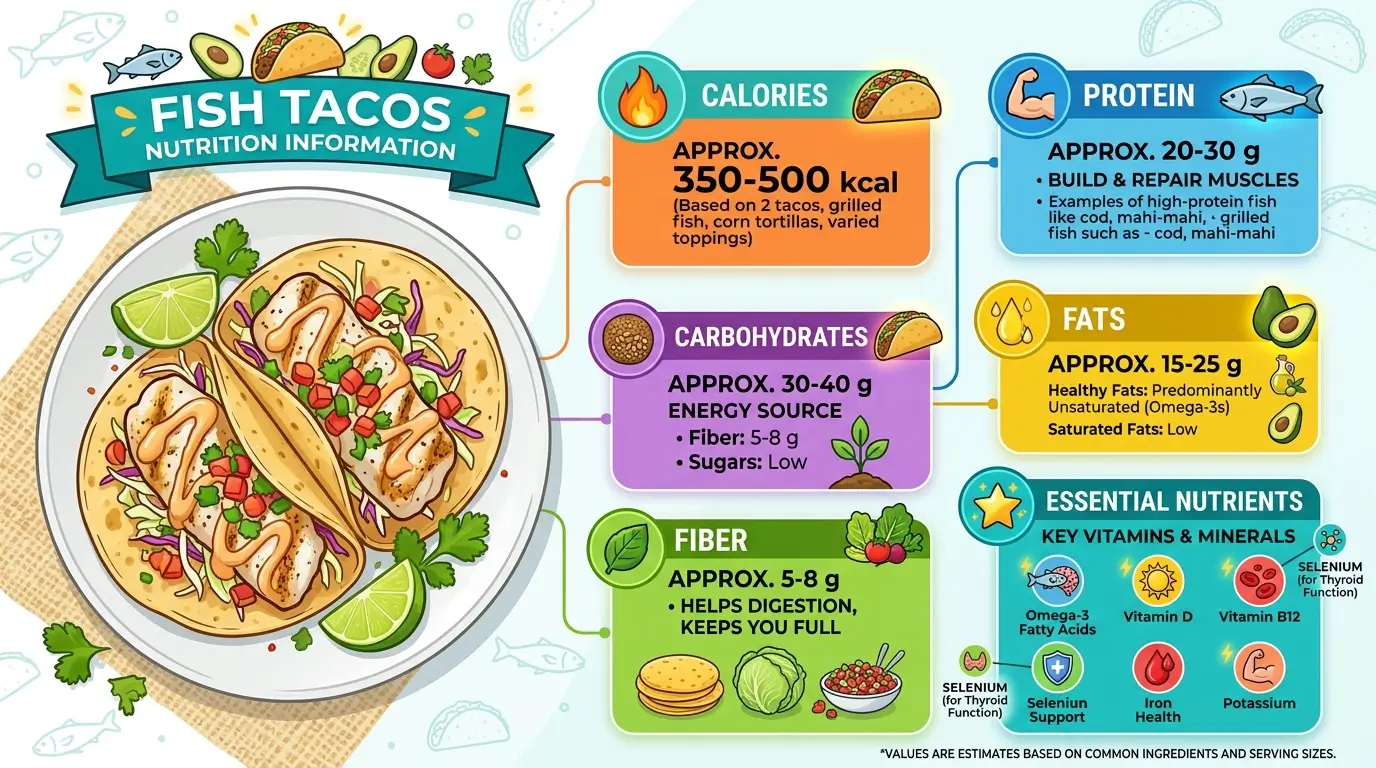
The following nutrition information is an approximate estimate for 2 fish tacos made with lean white fish, tortillas, cabbage slaw, and fresh toppings.
- Calories: 350–450 kcal
- Protein: 25–35 g
- Total Fat: 15–22 g
- Saturated Fat: 3–5 g
- Carbohydrates: 35–45 g
- Dietary Fiber: 4–7 g
- Total Sugar: 4–7 g
- Sodium: 600–900 mg
- Cholesterol: 50–80 mg
These values are estimates rather than laboratory-tested nutrition facts. Actual amounts can vary considerably depending on portion size, ingredients, cooking oil, tortillas, sauces, and toppings.
Calories in Fish Tacos
A serving of two fish tacos generally contains around 350–450 calories when prepared with lean fish and a moderate amount of toppings.
The fish itself is usually not the largest source of calories. Tortillas, cooking oil, creamy slaw, cheese, avocado, and sauces can increase the calorie content.
Protein Content of Fish Tacos
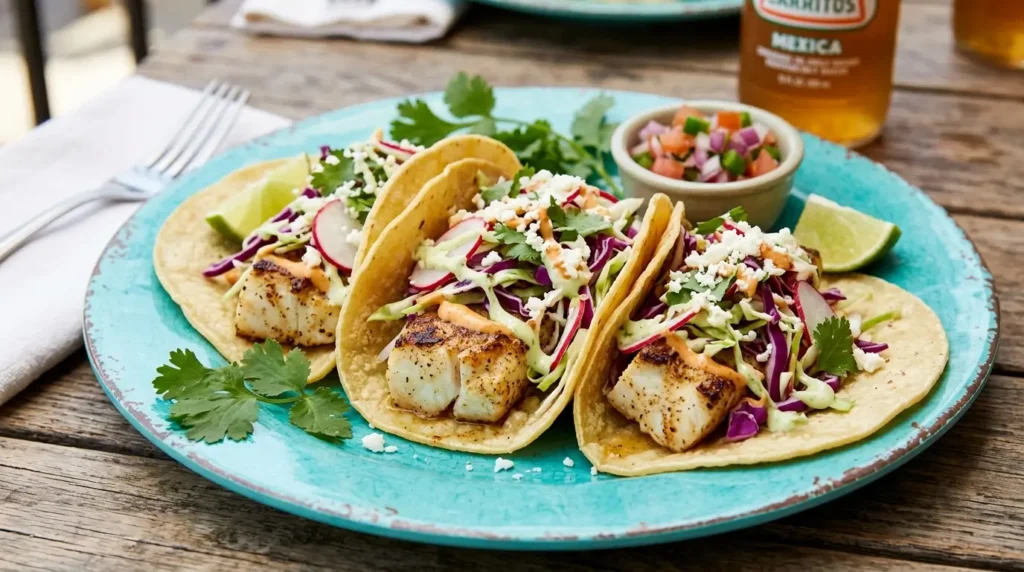
Fish tacos can be an excellent source of protein. Two tacos may provide approximately 25–35 grams of protein, depending on the type and quantity of fish used.
Protein helps support muscle maintenance and contributes to fullness after a meal. White fish such as cod, tilapia, haddock, and mahi-mahi can provide high-quality protein while remaining relatively lean.
Carbohydrates in Fish Tacos
Most of the carbohydrates in fish tacos come from the tortillas. Additional carbohydrates can come from cabbage, carrots, corn, sauces, and other toppings.
Two tacos may contain approximately 35–45 grams of carbohydrates, although this can vary depending on tortilla size and type.
Dietary Fiber
Fish itself contains little to no dietary fiber, so most of the fiber in fish tacos comes from vegetables and tortillas.
Cabbage, carrots, avocado, tomatoes, onions, cilantro, and other fresh toppings can increase the fiber content of the meal.
A serving of two fish tacos with plenty of vegetables may provide approximately 4–7 grams of fiber.
Total Fat and Healthy Fats
The fat content of fish tacos depends strongly on how the fish is prepared and which toppings are used.
Grilled or baked fish generally requires less added fat than fried fish. However, avocado can provide unsaturated fats, while mayonnaise-based slaw and creamy sauces can contribute more total and saturated fat.
A typical serving may contain approximately 15–22 grams of total fat.
Saturated Fat
Saturated fat can come from mayonnaise, cheese, butter, and certain cooking ingredients.
A serving of fish tacos may contain approximately 3–5 grams of saturated fat, depending on the recipe.
Using lean fish, a lighter slaw dressing, and limited cheese can help keep saturated fat lower.
Sodium Content
Fish tacos can contain more sodium than expected because of seasoned fish, tortillas, mayonnaise, sauces, cheese, and packaged taco seasonings.
A serving may contain approximately 600–900 mg of sodium, but the amount can be lower or higher depending on the ingredients.
To reduce sodium, use fresh herbs, lime juice, garlic, chili powder, cumin, and other spices for flavor instead of relying heavily on salty seasoning mixes and sauces.
Vitamins and Minerals in Fish Tacos
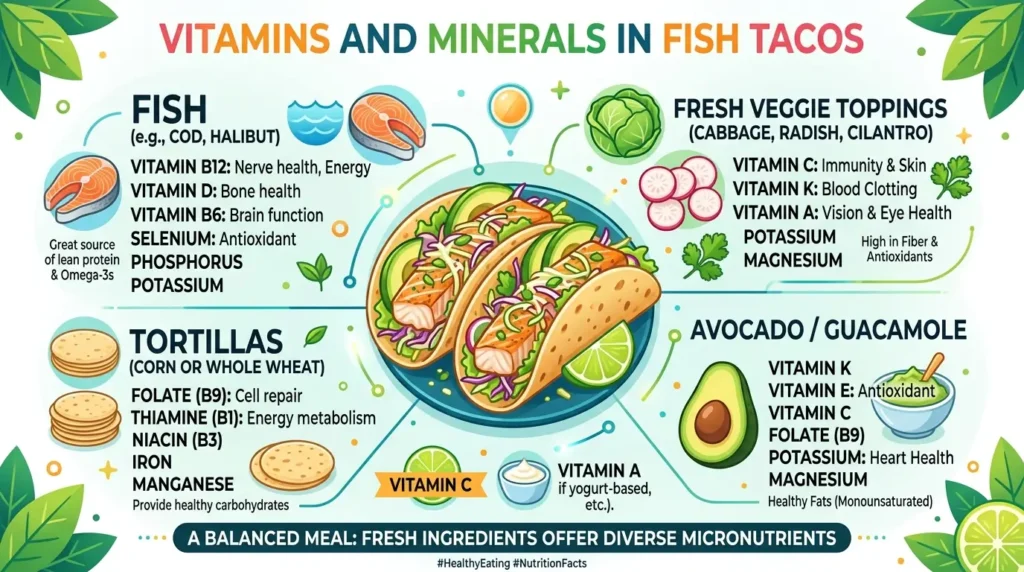
Fish tacos can provide a variety of vitamins and minerals when served with fresh vegetables and nutritious toppings.
Vitamin C
Cabbage, lime juice, tomatoes, and other fresh vegetables can contribute vitamin C. This nutrient supports normal immune function and helps the body absorb iron from plant foods.
Vitamin A
Carrots, cabbage, leafy greens, and certain toppings can provide vitamin A or carotenoids that the body can use to support normal vision and other functions.
Potassium
Avocado, vegetables, and fish can contribute potassium. Including a variety of vegetables and fresh toppings can increase the overall mineral content of the meal.
Selenium
Many types of fish are naturally good sources of selenium, an essential mineral involved in normal antioxidant and thyroid-related functions.
Vitamin B12
Fish is also a useful dietary source of vitamin B12, which is important for normal red blood cell formation and nervous-system function.
Grilled vs. Fried Fish Tacos
The cooking method can make a significant difference in the nutritional profile.
Grilled Fish Tacos
Grilled fish tacos are usually lighter because they require little added oil. They allow the natural flavor of the fish and seasonings to stand out while keeping the meal relatively lean.
Baked Fish Tacos
Baking is another simple option that can produce tender, flavorful fish without requiring much added oil.
Fried Fish Tacos
Fried fish tacos can be delicious and crispy, but breading and frying generally increase calories and fat. The exact difference depends on the type of coating and amount of oil absorbed during cooking.
Nutrition of Fish Taco Slaw
Creamy cabbage slaw adds crunch, freshness, and flavor to fish tacos. Cabbage and carrots provide vegetables and fiber, while mayonnaise contributes fat and calories.
A lighter slaw can be made with reduced-fat mayonnaise, Greek yogurt, lime juice, vinegar, and fresh herbs.
Using more cabbage and vegetables while keeping the dressing moderate can improve the overall nutritional balance.
Nutrition of Common Fish Taco Toppings
Toppings can significantly change the nutrition of a serving.
Avocado
Avocado adds creamy texture, fiber, potassium, and mostly unsaturated fat.
Pico de Gallo
Fresh tomato, onion, cilantro, and lime-based pico de gallo can add flavor and vegetables without contributing many calories.
Cilantro
Fresh cilantro adds color and flavor with very few calories.
Jalapeños
Jalapeños add spice and flavor while contributing only a small amount of calories when used as a topping.
Cheese
Cheese can add protein and calcium but also increases calories, saturated fat, and sodium.
Creamy Taco Sauce
Creamy sauces can add significant calories and fat, especially when used generously. Using a small drizzle instead of a large amount can help control the overall nutrition.
How to Make Healthier Fish Tacos
There are several easy ways to make fish tacos more nutritious without sacrificing flavor.
Choose grilled, baked, or air-fried fish instead of deep-frying. Add plenty of cabbage, carrots, tomatoes, onions, and other fresh vegetables. Use corn or whole-grain tortillas when desired, and keep creamy sauces to a moderate portion.
Fresh lime juice, cilantro, garlic, cumin, paprika, chili powder, and jalapeños can add plenty of flavor without relying on large amounts of salt, cheese, or heavy sauces.
Are Fish Tacos Good for a Balanced Meal?
Fish tacos can be part of a balanced meal because they can combine several food groups in one dish.
The fish provides protein, tortillas provide carbohydrates, and cabbage slaw and other vegetables contribute fiber and micronutrients. Avocado or a small amount of healthy oil can add unsaturated fats.
For an even more balanced meal, serve the tacos with a side of black beans, grilled vegetables, or a fresh salad.
Fish Tacos Nutrition FAQs
1. How many calories are in two fish tacos?
Two fish tacos generally contain about 350–450 calories, depending on the fish, tortillas, slaw, cooking method, and toppings.
2. Are fish tacos high in protein?
Yes. A serving of two tacos can provide approximately 25–35 grams of protein, depending on the amount and type of fish.
3. Are fish tacos healthy?
Fish tacos can be a nutritious choice when made with lean fish, vegetables, moderate toppings, and a lighter cooking method such as grilling or baking.
4. Are grilled fish tacos healthier than fried fish tacos?
Generally, grilled fish tacos contain less added fat and fewer calories than breaded and fried versions.
5. Does cabbage slaw add nutrition?
Yes. Cabbage and carrots can provide fiber, vitamins, minerals, and beneficial plant compounds. However, creamy dressing can increase calories and fat.
Final Nutrition Notes
Fish tacos can be both delicious and nutrient-dense when prepared with wholesome ingredients and balanced portions. Lean fish provides high-quality protein, vegetables add fiber and micronutrients, and fresh toppings can enhance flavor without requiring excessive amounts of heavy sauces.